·23 min read·Drug history
A history of the chemistry and drugs of addiction
The history of addiction treatments, and how pharmacology, stigma and regulation shaped which medicines reached patients.
I. A Drug for a Drug
In 1898, Bayer began selling a new medicine from its works in Elberfeld, a German factory town where the river sometimes ran the colour of that week’s dye.
The drug was diacetylmorphine or otherwise known as Heroin, from the German heroisch, a word which meant powerful: a drug with pronounced effects even in small doses.
24 years earlier, an English chemist named C. R. Alder Wright had heated morphine with acetic anhydride while investigating the structure of alkaloids. He sent the resulting compound to a colleague, who then administered it to dogs. The animals became fearful, began salivating and lost use of their hind limbs. Their breathing quickened and then slowed. Wright quickly published the observations and abandoned the project but Bayer saw something else.
Bayer was a company that had grown rich on synthetic dyes and was expanding into pharmaceuticals. Its laboratory was run by Heinrich Dreser, a 36-year old physician with a reputation for method and self-assurance. He also had a financial interest in the medicines that emerged under his supervision: he collected royalties on their German sales.
In the summer of 1897, a chemist at Bayer named Felix Hoffmann acetylated two familiar compounds. One became aspirin and the other heroin. Dreser tested the first, but was most excited about the latter. At his request, a physician named Floret ran trials in the dye works’ own clinic, on the dye works’ own patients. At a medical congress in 1898, Dreser reported that heroin was 10 times as effective as codeine against respiratory disease and, by his estimate, one-tenth as toxic.
Dreser’s comparative studies were careful enough that a physician a decade later called them classical. Heroin quieted breathing very efficiently. It also required a larger dose to kill under the experimental conditions Dreser used. At the time, tuberculosis and pneumonia were lethal, and a medicine that stopped a patient coughing would be very lucrative. Bayer marketed heroin for respiratory illness. Physicians also began using it to treat morphine dependence, as they believed that it was a cleaner opiate, powerful enough to replace morphine but somehow free of its grip.
Instead, they had found the opposite. The two acetyl groups made heroin more lipid-soluble than morphine, allowing it to cross into the brain more rapidly. There it was converted into active opioid metabolites, including morphine itself. The speed mattered as the rapid rise in drug concentration tends to produce stronger reinforcement than the same pharmacology delivered gradually.
The doubts arrived quickly. In 1899 the pharmacologist Erich Harnack called heroin a dangerous poison. By 1902 a French physician was warning that doctors treating morphine dependence with heroin were merely manufacturing heroinists.
Bayer meanwhile was securing its exclusivity. Because Wright had published the molecule in 1874, Bayer could not patent it, but they could own the word, and Heroin was registered as a trade mark in 1898.
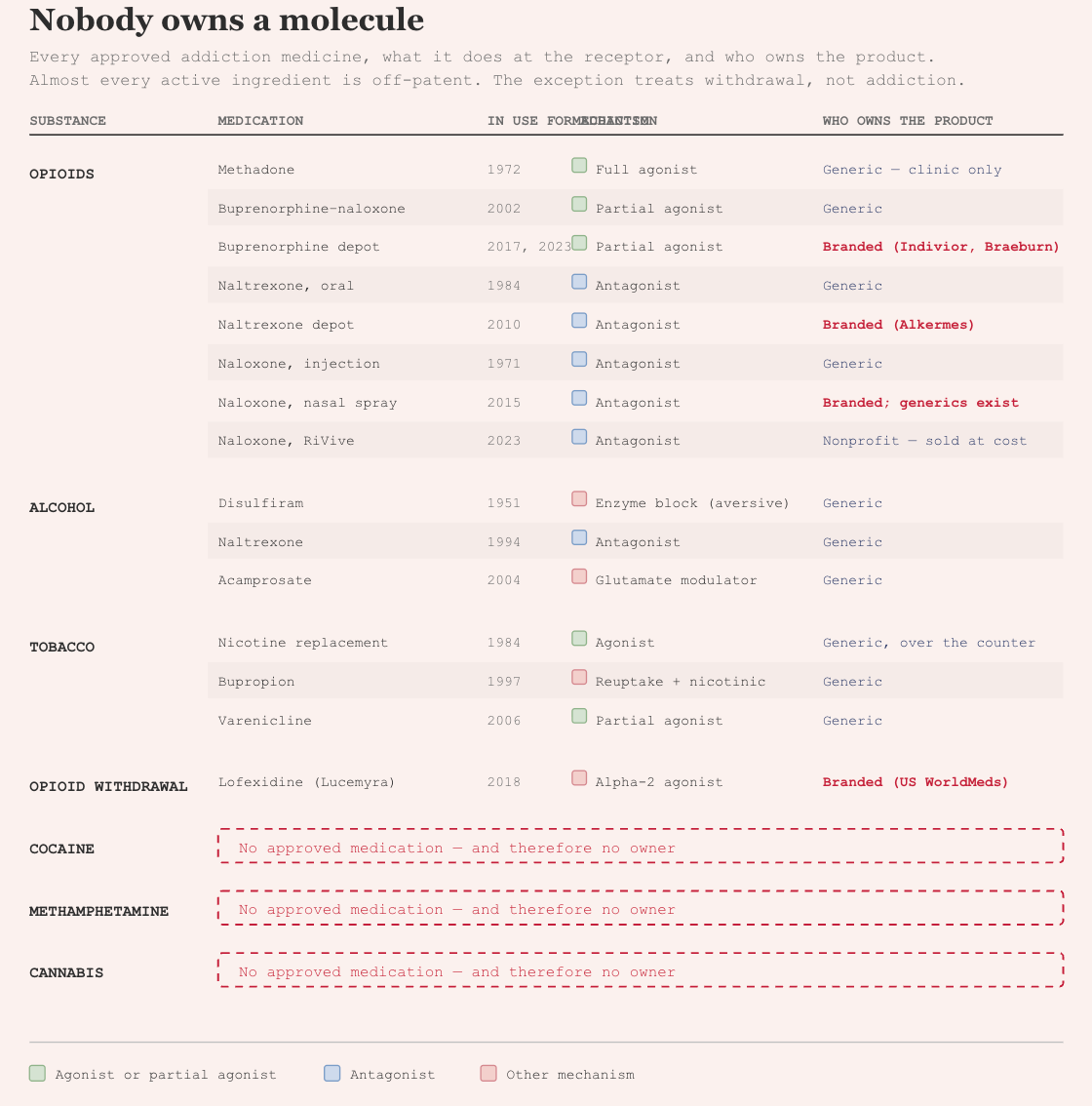
The first great error in addiction pharmacology was the belief that a stronger drug could solve the problems created by a weaker one. Decades later, methadone and buprenorphine would use another opioid to treat opioid addiction successfully. The distinction between these drug types is the foundation of modern addiction medicine. Heroin, methadone and buprenorphine all engage the mu-opioid receptor. The difference is how quickly they arrive, how completely they activate it and how long they remain.
The history of addiction drugs is full of these nuances. Physical dependence has repeatedly been mistaken for addiction and abstinence for recovery. A molecule that occupies a receptor has been treated as morally equivalent to the drug it replaces, and the result, that we will discuss in this essay, is that some of the most effective medicines in modern pharmacology have spent decades locked behind systems designed to discipline not treat patients.
Before following that history, it helps to separate the processes often gathered beneath the single word addiction.
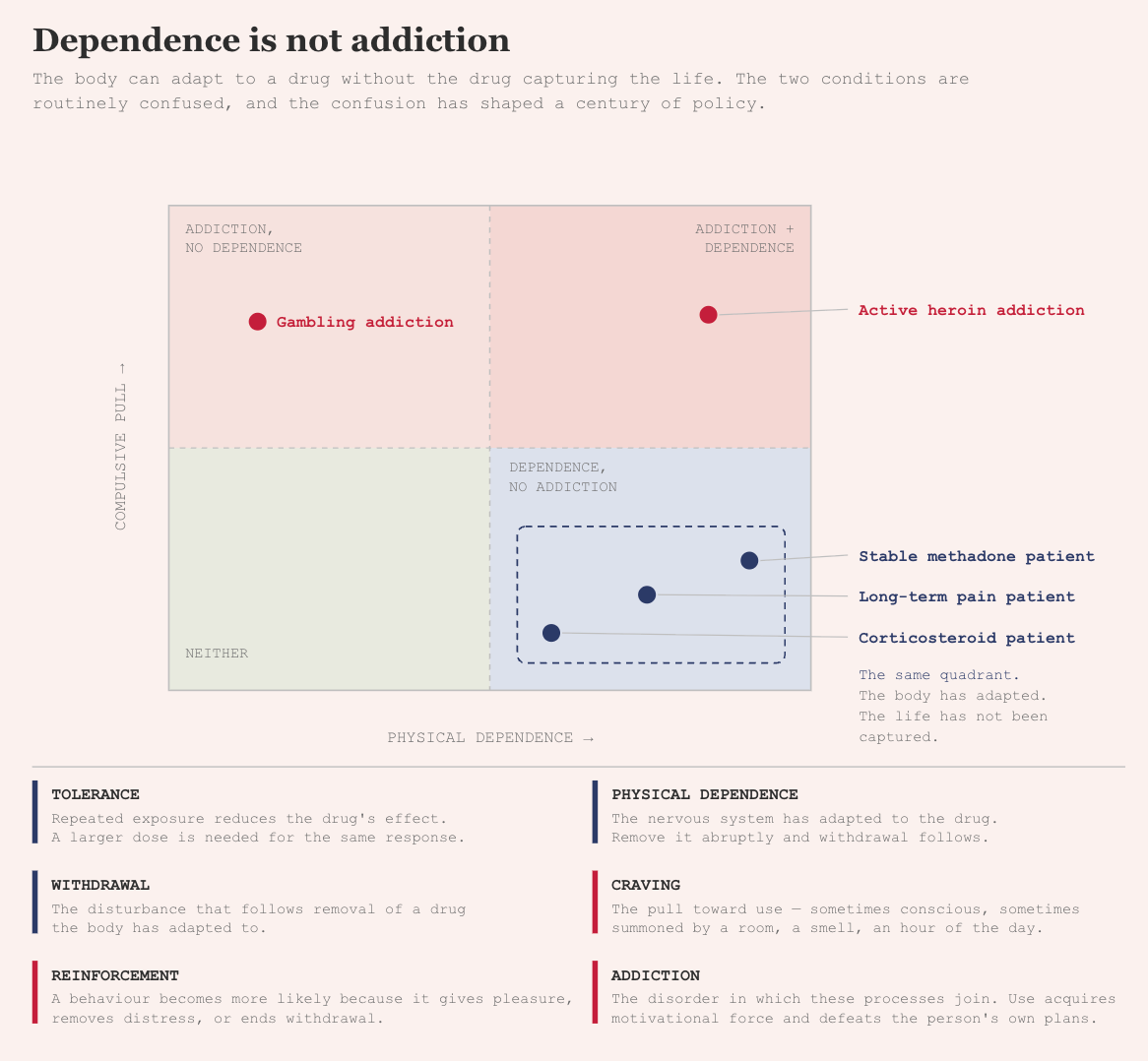
This is why addiction medicines can work without doing the same thing. Methadone suppresses withdrawal and stabilises opioid signalling. Naltrexone blocks part of the rewarding effects of opioids and alcohol. Disulfiram makes drinking unpleasant whilst acamprosate is intended to ease the destabilized state that can persist after alcohol withdrawal
II. The Shell Game
Morphine helped create the modern idea of a drug: a pure substance that could be isolated, weighed and dosed. It also revealed the danger of purification, as when opium consumed by mouth it arrives at the receptor slowly. Morphine, the alkaloid isolated from it, delivered by syringe arrives with speed and precision. By the end of the nineteenth century physicians were speaking of morphinism, and the search for a cure had begun. The first instinct was substitution.
In 1884, Sigmund Freud published an essay praising cocaine and proposed it as a treatment for morphine dependence. He recommended it to his friend Ernst von Fleischl-Marxow, a physiologist who had developed a morphine habit while living with severe, neuropathic pain. Fleischl-Marxow exchanged one dependence for another, and his cocaine use escalated. He hallucinated snakes and subsequently died at 45.
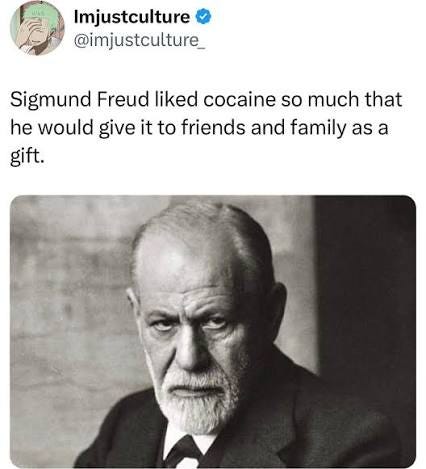
In Baltimore, William Halsted became dependent on cocaine while investigating its use as a local anesthetic. His colleagues tried to rescue him with morphine. Halsted went on to transform American surgery and appears to have continued using morphine for much of his professional life. The substitution was cocaine for morphine or morphine for cocaine, and heroin for both. There is great book, called Anatomy of Addiction by Howard Markel on the addictions of both Halsted and Freud, and how this shaped their enormous contributions to psychology and medicine.
The failures looked like evidence that substitution itself was a poor hypothesis. But this interpretation confused the molecule with the pattern of delivery. A drug that enters the brain rapidly and disappears quickly can divide a day into cycles of intoxication, decline, withdrawal and renewed pursuit. A slower drug with a long half-life may engage the same receptor while producing a very different life.
The era’s one non-substitutive treatment was stranger still. A former insurance salesman named Charles B. Towns opened a sanatorium on Central Park West and dosed patients hourly with belladonna, a deliriant, until their pupils widened and they began to hallucinate. Pharmacologically it was nonsense; belladonna does nothing to opioid receptors. What it produced was several violent, disorienting days that most patients did not care to repeat.
In 1934 a failing stockbroker named Bill Wilson was admitted to Towns Hospital for the fourth time, given the belladonna regimen, and experienced, in the grip of an anticholinergic delirium, a blinding white light and a sense of overwhelming presence. He never drank again and went on to co-found Alcoholics Anonymous.
The Harrison Narcotics Tax Act of 1914 required those handling opiates to register and pay a tax. It permitted physicians to prescribe them in the course of professional practice, but the federal government and the courts came to interpret the maintenance of an addicted patient as something outside legitimate medicine. In Webb v. United States (1919) the Supreme Court agreed.
The implication was decisive. Addiction was not a disease, because maintaining an addicted person was not medical treatment. And maintenance was not medical treatment because addiction was not a disease.
Physicians who prescribed opioids to dependent patients were prosecuted. Clinics closed. The addicted person moved, in law and in public imagination, from the consulting room to the criminal docket.
In 1935 the federal government opened the United States Narcotic Farm in Lexington, Kentucky. Some residents came voluntarily and others were forced. The institution offered labour, discipline and a temporary removal from drugs. It also became a serious research centre, it was here that the opioid withdrawal syndrome was first characterized with precision, and that physical dependence was distinguished from addiction.
This legal transformation produced a scientific absence. During the same decades in which medicine developed insulin, sulfonamides and penicillin, addiction pharmacology produced almost nothing of lasting value. This was because drug development requires an accepted disease, an identifiable patient population, and an institution willing to pay for clinical trials.
III. Four Theories of the Patient
The first widely used medication developed specifically for alcohol dependence was discovered by accident. In the 1940s two Danish researchers, Erik Jacobsen and Jens Hald, were studying tetraethylthiuram disulfide, an industrial chemical used in rubber manufacturing, as a possible treatment for intestinal parasites. Their company was known for who testing experimental compounds on its own scientists.
Jacobsen and Hald took the chemical and later went to a social event where they drank alcohol. Both became violently ill, their hearts began to race and their heads started to throb. Each feared he might die.
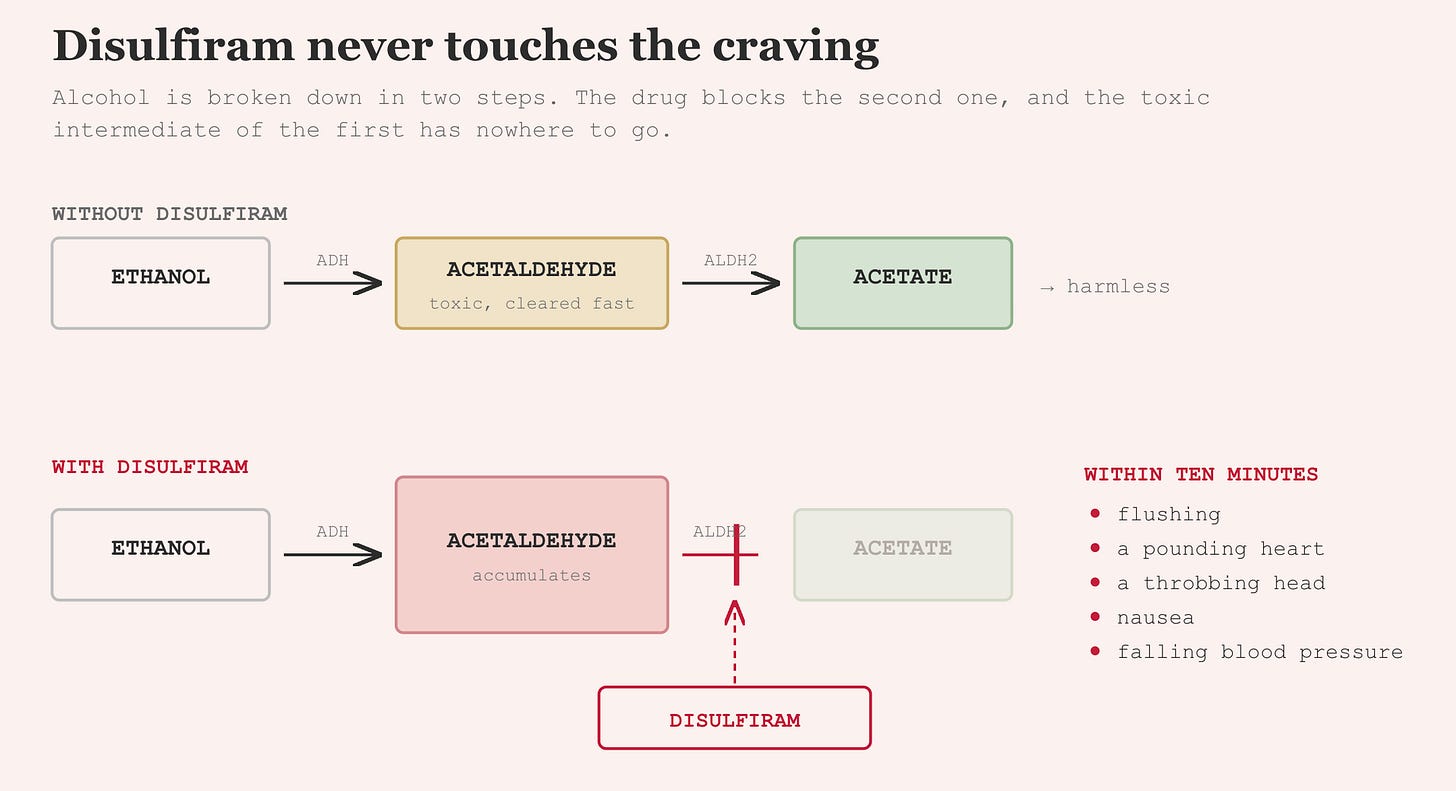
Alcohol is metabolised first into acetaldehyde, a toxic intermediate, and then into acetate. The chemical they had taken inhibited aldehyde dehydrogenase, the enzyme involved in the second step. Acetaldehyde accumulated. A single drink became a physiological punishment. In 1948 they published, and the drug was marketed as disulfiram, or Antabuse.
Disulfiram does not remove alcohol craving. It does not normalise the reward system or ease withdrawal, instead it makes drinking extremely unpleasant, but a person who reliably takes a pill each morning in order to make future drinking unbearable has already exercised much of the self-command the medication is supposed to provide. In the largest blinded trial, a Veterans Administration study of 605 men, disulfiram produced no improvement in total abstinence or in time to first drink, though it reduced drinking days among those who resumed drinking. A later meta-analysis found the drug effective in open-label trials and not in blinded ones, meaning it works when somebody be that a spouse or a nurse watches the pill go down.
This was one theory of the addicted patient that the future behaviour had to be secured by an aversive consequence. A second theory emerged at the Rockefeller Institute in the 1960s.
Vincent Dole was a physician and metabolism researcher known for his work on obesity and lipids. After serving on a city committee on narcotics, he began reading the literature and found a field dominated by incarceration with a high chance of relapse. He recruited Marie Nyswander, a psychiatrist who had treated people with heroin addiction at Lexington. They both felt that addiction could not adequately be explained as weak character or criminality. They began experimenting with maintenance. Morphine did not work, its effects rose and fell too quickly, and patients remained focused on the next dose.
Methadone was different. It had been synthesized in Germany during the search for analgesics that did not depend on imported opium. Taken orally, it was absorbed more gradually than heroin and remained in the body much longer. At a sufficient dose it suppressed opioid withdrawal, reduced craving and produced cross-tolerance, meaning that heroin used on top of it had less effect. Patients would however remain physically dependent on an opioid, and this would dominate the politics of methadone for decades.
Encouragingly though, some patients on methadone found work and criminal activity fell. Dole and Nyswander reported in 1965 that they were no longer preoccupied with obtaining the drug. A methadone patient was still dependent on opioids and abrupt discontinuation could still produce withdrawal, but it did remove the destabilising cycle: the rapid peak, the falling concentration with sickness, needing to find another dose. Dole and Nyswander concluded that physical dependence was not the same thing as addiction. Their critics disagreed.
In 1972, federal regulations confined methadone treatment for addiction to specially certified programmes. Patients had to report to a clinic each morning, swallow a dose under observation and submit to urine testing. Take-home doses were rationed according to compliance and time in treatment. An ordinary physician could prescribe methadone for pain, but not as easily for addiction outside of a certified programme.
A third theory emerged from receptor pharmacology. In 1973 the opioid receptor was identified by radioligand binding, and 2 years later the brain's own opioid peptides, the enkephalins, were purified.
Naloxone, patented in 1961, binds strongly to the mu-opioid receptor and displaces opioid agonists. In an overdose it can restore breathing within minutes, though its duration is short enough that a person may slip back into overdose once it clears. The tragedy is that one its inventors, Jack Fishman, lived to see his own stepson die of a heroin overdose.
Naltrexone, a related antagonist, could be taken orally and lasted longer. If opioid use persisted because it was reinforcing, then blocking the effect should remove the reinforcement, and over time the behavior might extinguish. The FDA approved it for opioid dependence in 1984. However, it did not gain traction as it did not provide the relief of an agonist. It did not resolve the reasons a person wanted to use, and it generally required detoxification before treatment could begin. The extinction model underestimated withdrawal and the anticipated possibility of relief.
A fourth theory arrived in the form of buprenorphine, synthesised in 1966 at Reckitt & Colman, a British firm then better known for disinfectant.
Buprenorphine is a partial agonist at the mu-opioid receptor. It binds with high affinity, displacing other opioids and resisting displacement itself, but it activates the receptor less fully than heroin or methadone. Its effects eventually reach a ceiling, reducing the risk of fatal respiratory depression when taken alone. Buprenorphine can suppress withdrawal and craving without producing the same degree of intoxication as a full agonist. Its long receptor residence made daily life less volatile, but it too was treated with stigma.
IV. The Scandal of Maintenance
The hostility to methadone and buprenorphine was that these medicines violated a preferred narrative of recovery. Drug courts prohibited it and families urged relatives to become completely clean. Patients sometimes absorbed the same judgment and discontinued treatment in order to prove that they were well.
The evidence points the other way. In the largest meta-analysis of cohort studies, people with opioid dependence died at 11.3 per 1,000 person-years while receiving methadone, and 36.1 per 1,000 while out of treatment.
Nobody generally describes a person who uses a nicotine patch as another form of addiction. The patch is understood as a delivery system whose slower pharmacokinetics reduce reinforcement while controlling withdrawal.
Medicine is full of treatments that create dependence in this narrow physiological sense. Corticosteroids may need to be tapered, certain antidepressants produce discontinuation symptoms and clonidine cannot always be stopped abruptly.
The Drug Addiction Treatment Act of 2000 allowed qualified physicians to prescribe approved opioid medications for addiction outside the methadone clinic system. Buprenorphine was approved for this purpose in 2002. But the permission came with an X-waiver, required training and strict patient limits (only 30 patients). This meant that a doctor could prescribe large quantities of full-agonist opioid painkillers without a special addiction-treatment licence, but to treat dependence they needed federal permission. The waiver was abolished at the end of 2022. Most clinicians who gained the legal ability to prescribe buprenorphine still did not do so.
V. The Medicine the System Preferred
In 1994, naltrexone was approved for alcohol dependence. The pharmacological rationale differed from its use in opioid addiction. Alcohol stimulates endogenous opioid signalling, which contributes to its rewarding effects. By blocking opioid receptors, naltrexone can reduce the pleasure associated with drinking and weaken the tendency of one drink to lead to another. The effect is real but modest. The largest review found that treating twelve patients prevents one additional return to heavy drinking compared with placebo.
Acamprosate, approved in the United States in 2004, approached alcohol dependence from another direction. Chronic alcohol exposure alters excitatory and inhibitory signalling in the brain. When drinking stops, the nervous system may remain hyperexcitable, producing insomnia and a prolonged sense of disequilibrium. Acamprosate is intended to stabilize that post-withdrawal state, although its precise mechanism remains debated. European trials found it useful, while the largest American trial could not separate it from placebo. The likeliest explanation is unglamorous. European trials mostly enrolled patients who had already been detoxified and acamprosate repairs a brain that has stopped drinking.
An extended-release injection of naltrexone introduced another element: adherence.
Oral naltrexone works only when swallowed. Alkermes developed a monthly injectable formulation, Vivitrol, for roughly $1000 a shot. Its clinical development was funded in part by a Small Business Innovation Research grant from the National Institute on Drug Abuse, disclosed in the company’s own filing announcing the approval. The taxpayer helped pay for the formulation, then bought it back at brand prices, through Medicaid, for people the state had placed in front of a judge.
The company spent $19 million on federal lobbying and promoted the drug not only to clinicians but to judges, sheriffs, prosecutors and parole officers. A company policy director told investors that there were more than 3000 counties in the United States and more than 3000 drug courts. In at least eight Indiana courts, Vivitrol was the only addiction medication permitted. Defendants have described being offered the injection or jail.
The appeal was easy to understand. Vivitrol was not an opioid. It did not produce physical dependence. It could be described as drug-free treatment.
That description was pharmacologically narrow and politically powerful. Methadone and buprenorphine had stronger evidence for reducing mortality, but they activated the same receptor system as heroin. Vivitrol blocked it. To institutions organised around abstinence and accountability, blockade felt morally cleaner.
The clinical difficulty appeared before the first dose. A patient generally had to complete opioid withdrawal before receiving extended-release naltrexone; administering an antagonist too early precipitates severe withdrawal. In a head-to-head trial against buprenorphine, patients who successfully began either medication had broadly comparable outcomes — but roughly a quarter of those assigned to naltrexone never received the first injection.
The alignment can run in the other direction too, and just as badly. Reckitt’s pharmaceutical arm, spun off as Indivior, held a buprenorphine tablet whose patents were expiring. It introduced a dissolving film, and then, according to the Justice Department, announced the discontinuation of the tablet on the stated grounds of paediatric safety. A patient-support programme was used, prosecutors said, to route opioid-dependent patients toward doctors known to prescribe carelessly and at high volume.
In 2019 Reckitt Benckiser paid $1.4 billion, the largest recovery in an opioid-drug case in American history. In 2020 Indivior pleaded guilty to a felony and paid $600 million more, and was required to disband its Suboxone sales force permanently.
VI. The Hole in the Pharmacopoeia
There is no FDA-approved medication for cocaine or methamphetamine use disorder.
Opioids act primarily through a receptor system with agonists, partial agonists and antagonists, creating a number of possible interventions. Stimulants are less accommodating. Cocaine blocks monoamine transporters, especially the dopamine transporter, increasing dopamine concentrations in the synapse. Methamphetamine enters presynaptic terminals, disrupts vesicular storage and promotes the release of monoamines while reversing transporter flow. Interventions that reduce dopamine-mediated reward may also reduce motivation and pleasure more broadly.
Hundreds of trials have tested antidepressants, antipsychotics, dopamine agonists, vaccines and substitution strategies. A systematic review of reviews found that most produced effects too small and inconsistent for approval.One of the better recent results came from a combination of extended-release naltrexone and bupropion in adults with methamphetamine use disorder. The combination performed better than placebo (a response rate of 13.6% against 2.5% on placebo).
The most consistently effective treatment for stimulant use disorder is contingency management, in which patients receive money after objective evidence of abstinence, providing a compelling reward. It was the only intervention that review found sufficient evidence to support.Yet the intervention has repeatedly met political resistance. Paying a person for a drug-negative urine test feels, to many people, like rewarding behaviour that ought to occur without payment. Incarceration may cost far more however.
Commercial incentives compound the problem. In 1995 an Institute of Medicine committee asked why, given the scale of the epidemic, industry had produced so little, and concluded that the disincentives were “formidable”. Many promising combinations involve generic medicines; a company that funds large confirmatory trials may have no protected product at the end. The potential patient population is substantial, but many patients are uninsured, publicly insured or poorly connected to routine medical care.
VII. What It Means to Want
Every so often a field is rescued from the outside. GLP-1 (glucagon-like peptide-1) is an incretin hormone, secreted by L-cells in the distal gut in response to food. It potentiates insulin release, and signals satiety. Its receptor agonists, including semaglutide and tirzepatide, were developed for type 2 diabetes and then for obesity.
GLP-1 receptors, are also expressed in the ventral tegmental area and the nucleus accumbens which are the dopaminergic core of the reward system. Preclinically, GLP-1 agonists reduce self-administration of alcohol, cocaine, nicotine, and opioids in rodents, and they blunt the dopamine surge that follows a drug reward.
Patients taking semaglutide for weight loss began reporting that they had stopped wanting to drink. Large observational and pharmaco-epidemiologic studies followed, finding lower rates of alcohol-related events and substance use disorder diagnoses among GLP-1-treated patients.
In early 2025, Christian Hendershot and colleagues published in JAMA Psychiatry a Phase 2 trial of low-dose semaglutidein 48 non-treatment-seeking adults with alcohol use disorder. The design was clever: the primary endpoint was a laboratory self-administration session, in which participants were given access to their preferred drink for two hours and observed. After nine weeks, the semaglutide group drank less in the lab and craving fell. In the subgroup who smoked, cigarettes per day fell as well.
Then, in May 2026, The Lancet published a 26-week randomized, double-blind, placebo-controlled trial of once-weekly semaglutide in 108 treatment-seeking adults with moderate-to-severe alcohol use disorder and comorbid obesity. All participants received cognitive behavioral therapy. Heavy drinking days fell by 41.1 percentage points from baseline on semaglutide, vs 26.4 on placebo (p = 0.0015). This is exciting because it is a genuinely new mechanism. If the incentive-sensitisation theory of addiction is right, and the disease consists in the pathological attribution of wanting, then a drug that globally attenuates incentive salience is aimed at the disease itself.
Critics will look at the placebo arm and argue that those who participants who received cognitive behavioural therapy and a saline injection cut their heavy drinking by two-thirds as much as the people who received the drug. The trial was enriched for obesity, single-centre, and small. Nobody yet knows whether the effect persists after discontinuation, what it does in the non-obese and if it works for opioids, or what happens to a person with an eating disorder history. The trials are running.
Still, the drugs point toward a broader therapeutic ambition. Earlier addiction medicines were built around a particular substance or receptor. Methadone addressed opioids, and varenicline addressed nicotine. A medication that reduced the motivational force of several appetitive cues would be different.
Psychedelic-assisted therapy is also gaining traction. In the 1950s, researchers in Saskatchewan administered LSD to people with alcoholism, with the thought that it might simulate delirium tremens and frighten them into sobriety. Instead some participants reported transformative experiences, followed by prolonged reductions in drinking. The early studies were methodologically weak, and a later meta-analysis of the best of them found a real benefit that faded within the year. The research ended amid legal prohibition and scientific disrepute.
Decades later, small modern trials of psilocybin alongside psychotherapy again reported reductions in heavy drinking. Psychedelics may create a temporary period in which patterns of thought and behavior become more flexible.
The scientific difficulty follows. It is hard to blind trials because patients know what they have received. A dramatic experience may produce genuine change but this hardly fits into the standard convention of pharmaceutical trials.
Other options include Ibogaine which is derived from a West African shrub, it has long been used in underground and overseas clinics for opioid dependence. Some patients report a rapid interruption of withdrawal and craving after a single administration, but the drug also carries serious cardiac risk, including QT prolongation and fatal arrhythmia.
Ibogaine embodies the vacuum left by conventional medicine. Patients seek it because existing treatments have failed them, or require indefinite maintenance they do not want. There is a move to formalise such research: in 2025 Texas appropriated $50 million for ibogaine development, and could find no pharmaceutical partner willing to take it on. The FDA has since cleared a Phase 1 safety study of a derivative.
At the other end of the risk spectrum is cytisine. It is a plant alkaloid and a partial agonist at the same nicotinic receptor targeted by varenicline. Cytisine has been sold in Bulgaria, as Tabex, since 1964, and is inexpensive. Cochrane finds that it helps more people quit than placebo, and that 2 head-to-head trials show no clear difference in quit rates between cytisine and varenicline.
For 6 decades it has been unavailable in the U.S, because no company had a commercial reason to finance the development required for approval. A small firm, called Achieve Life Sciences, eventually ran two Phase 3 trials and filed. On 22 June 2026 it received a Complete Response Letter. The FDA identified no deficiency in the drug’s efficacy or safety, but issues with a third-party manufacturing facility.
Drug development is not a neutral process that selects the best molecules. It selects molecules that can attract capital and survive regulation.
VIII. Permission
Naloxone was developed in the early 1960s and approved in the United States in 1971. It took 52 years for it reach pharmacy shelves as an over the counter product. Buprenorphine was synthesized in 1966 and approved for office-based treatment in 2002, but for over 2 decades, clinicians needed a special waiver to prescribe it.
Methadone has been used to treat opioid addiction since the 1960s, but it remains largely confined to a separate clinic system. The delays are often attributed to regulatory lag, but I think a lot of this is about destructive beliefs about what addiction was, and what addicted people deserved.
A medicine for infection is judged by whether it clears the infection, but addiction treatments have frequently been whether the patient appears sufficiently free of drugs, disciplined and transformed.
Methadone can cut mortality by two-thirds while leaving physical dependence intact. It prevents withdrawal and reduces illicit use, yet the persistence of dependence is sometimes considered to be a therapeutic failure.
The purpose of addiction treatment is not to make the body incapable of withdrawal, it should be to reduce death, restore control, and allow a life to become larger than the pursuit of a drug. For some people, this will eventually include abstinence from every opioid but for some, it will include long-term methadone or buprenorphine.
The United States eventually removed the X-waiver and expanded access to naloxone. Overdose deaths, having peaked near 110,000 in 2022, later began to decline, and stood at roughly 69,000 in the 12 months ending January 2026. No single explanation is sufficient but the thought is that wider naloxone availability, expanded treatment, changes in the illicit supply and shifts in behavior may all have contributed.
The newer approach for addiction is more focused on keeping the patient alive. We now have medicines that stabilise opioid receptors, block overdose, reduce alcohol reward, soften nicotine withdrawal, and perhaps diminish the salience of several kinds of wanting. We also have a striking absence of medicines for stimulants and numerous access restrictions. In 2023, of an estimated 54.2 million Americans who needed treatment for a substance use disorder, 12.8 million received any.
The chemistry of wanting less is therefore not only a history of discovery. It is a history of permission and what society was willing to fund.
Read next